x

Offer to Purchase vs. Letter of Intent (LOI)

Why We Prefer an Offer to Purchase Over an LOI

You’ll hear a lot about Letters of Intent. There’s nothing inherently wrong with an LOI  many respected advisors use them and prestigious business schools teach them. But after 25+ years of buying, selling, and brokering businesses, we’ve found a process that serves serious buyers and sellers better: the Offer to Purchase.

What Each Document Actually Communicates

By the time you’re ready to make an offer, you’ve already done your homework. You’ve reviewed the financial package, analyzed the cash flow, spoken with the broker, met the seller, asked your questions, and positioned yourself with the bank. You’re no longer simply interested  you’re prepared to buy. The document you use should reflect that.

A Letter of Intent often communicates: “I’m interested, but I’d like a lot more information before I’m willing to commit.” An Offer to Purchase communicates something far stronger: “Based on everything I’ve reviewed, I intend to purchase this business, provided financing, underwriting, and due diligence confirm what has been represented.”

The seller doesn’t need another person who’s thinking about buying. They’re looking for someone who’s actually prepared to become the next owner.

Why a Stronger Signal Wins Deals

Most quality businesses receive hundreds of buyer inquiries. An Offer to Purchase tells the seller you’re serious, tells the broker you’re prepared, and tells the bank you’re committed to the process. In a crowded field of “maybe” buyers, the prepared buyer who signals real intent stands out  and serious sellers appreciate serious buyers.

You Keep All of Your Protections

Let’s be very clear: an Offer to Purchase does not eliminate your protections. If underwriting uncovers material issues, if due diligence reveals significant problems, or if the financial information isn’t accurate, you retain the ability to terminate the transaction. No one is asking you to buy a bad business.

The Offer to Purchase simply says that if the business proves to be what it has been represented to be, you’re ready to move forward. That’s the mindset of an owner  not a shopper. It moves serious buyers toward ownership instead of encouraging endless analysis.

Don’t Become a Professional Thinker

One of the biggest mistakes buyers make is becoming professional thinkers  continuing to ask questions, request documents, and analyze while another qualified buyer purchases the business. There comes a point where you have enough information. You either move forward or you move on. There really isn’t a third option. Professional buyers make decisions.

Make Your Offer With Confidence

If you’re approaching the offer stage, we’ll help you structure an Offer to Purchase that signals real intent while protecting you through financing and due diligence. As the Peterson Principle goes: great acquisitions aren’t won by the fastest buyer  they’re won by the most prepared buyer.

Talk through your offer strategy →

Frequently Asked Questions

Mostly no. An LOI is largely a non-binding framework that outlines proposed terms before the definitive purchase agreement. Typically only a few provisions are binding — most commonly confidentiality and, when included, an exclusivity period. The binding commitment to buy comes later, in the purchase agreement, and remains subject to your contingencies.

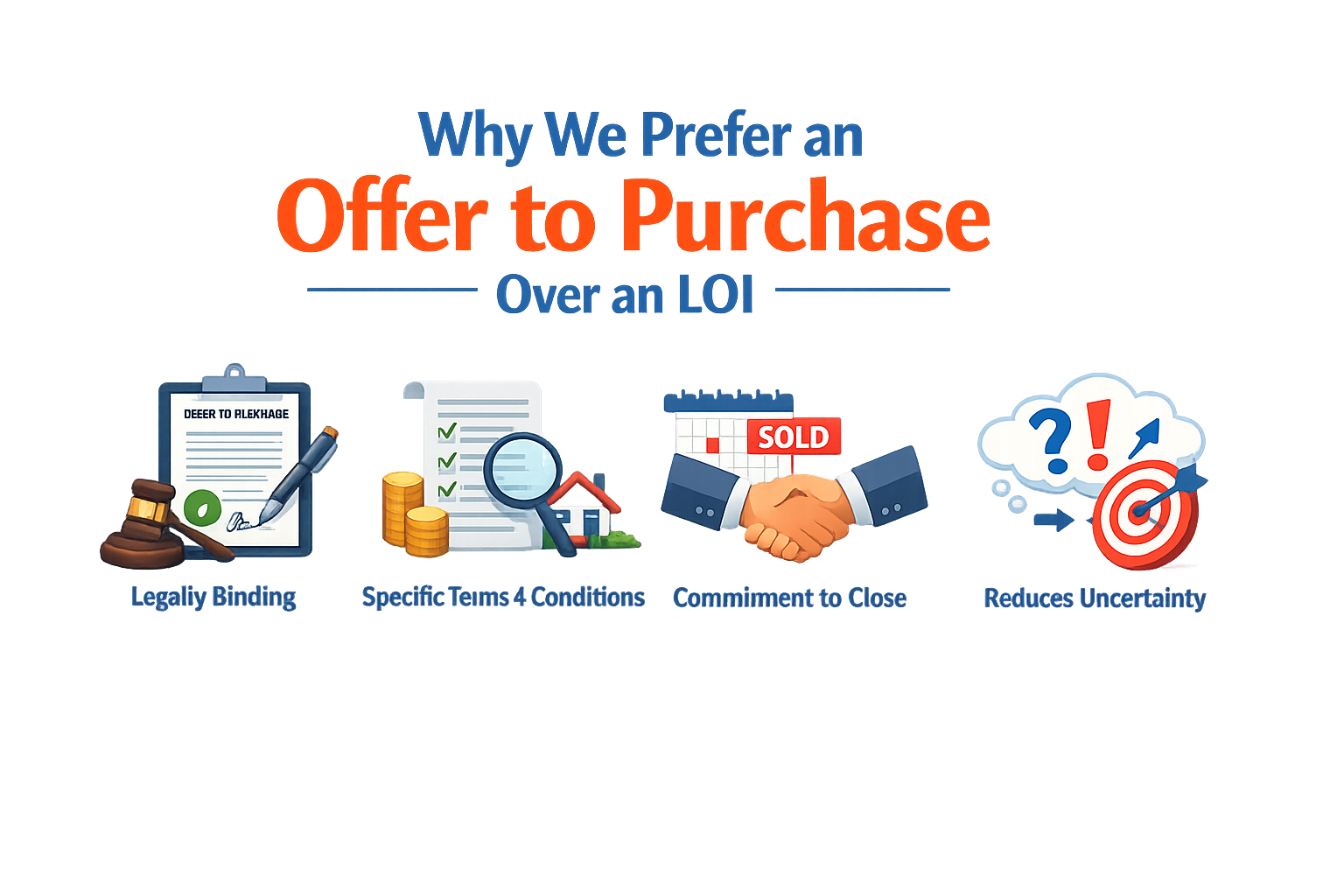
An LOI is largely non binding and sets the stage for negotiation, while an Offer to Purchase is a more complete, actionable document that moves the deal forward more decisively. A well-built Offer to Purchase keeps every buyer protection intact through the same contingencies, so being more decisive doesn’t mean being less protected.

At minimum: satisfactory due diligence, financing approval, clean and transferable documentation, lease assignment if location matters, and an acceptable final purchase agreement. These contingencies are your most important protection  they let you renegotiate or walk away without penalty if what you verify doesn’t match what you were told.

Most small business acquisitions are structured as asset sales, where you buy specific assets and generally avoid inheriting the seller’s past liabilities. Stock sales transfer the entire entity, including liabilities, and are often preferred by sellers for tax reasons. The right structure depends on tax and liability factors, so your attorney and accountant should advise on it.

Ready to Buy the Right Business?

Making an offer is where preparation meets opportunity. Work with Peterson Acquisitions to structure an offer that moves the deal forward while protecting everything that matters — and review the complete process in how to buy a business.

voted #1 business broker

Working With Us Is Easy

We've Made the Process Simple & Pain-Free

1

Call Now or Click Below

Call (800) 845-0188 or contact us here.

2

We'll Discuss Your Situation, Timeline & Goals

Phone, email, text or meeting in person, we'll do whatever it takes

3

You'll Engage Us for Services

We'll formalize an agreement and it will be full-service from here on out with a level of professionlism and communication that will blow you away!

4

Sold!

You now have peace of mind that your business was sold your way to the right buyer.

STEP 1

Provide your name, email, and phone to start the process.

STEP 1

Provide your name, email, and phone to start the process.

STEP 1

Provide your name, email, and phone to start the process.

Please complete information on the next page as well. The information is necessary for your consultation.